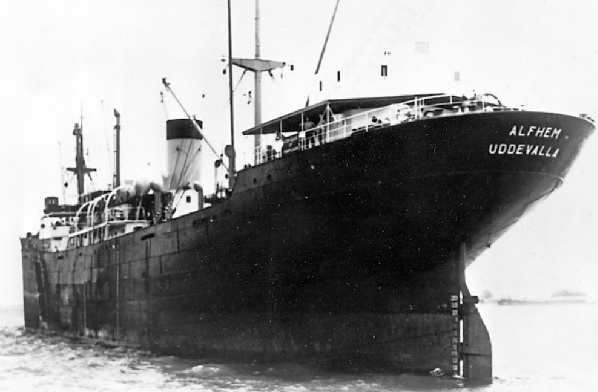
A floating coffin. That was the name given to AB Bohuslänska kusten’s MS Alfhem when she left her home port of Uddevalla on April 6, 1954, to load Czech weapons in Poland. The boat was built in 1930 and badly worn from cargo for the United States during the war.
Often with only a fraction of the cruising speed of 9 knots, because the engines often failed. The crew slept with life jackets in their beds and shared their food with cockroaches.

However, no worse than the fact that Captain Lind took his wife Majken and two children with him on the journey across the Atlantic. An adventure from Stettin to Guatemala with a couple of thousand tons of Czech weapons and ammunition.
Scared President Eisenhower

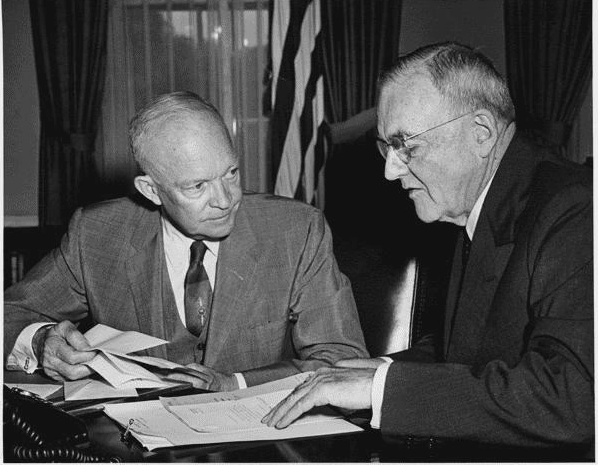
The clip of the events of May 1954 is taken from Dwight Eisenhower’s memoir Mandate for Change, The White House Years 1953-1956.
The delivery, according to the president, would lead to “Communist dictatorship … on this continent to the detriment of all American nations . . .” His Secretary of State John Foster Dulles saw the “communists” in the country as a threat near the Panama Canal.
Guatemala powder keg
In early 1954, the situation in Guatemala was very tense. President Jacobo Árbenz Guzmán had implemented extensive land reforms that challenged both domestic elites and foreign interests, especially the American United Fruit Company. The United States, which during the Cold War saw developments in Guatemala as a threat of communist expansion, launched a covert operation through the CIA to overthrow the government.
To defend itself against the growing external threat, especially from the CIA-backed exile army under Carlos Castillo Armas, the Árbenz government desperately sought arms. Since the United States and its allies had imposed an unofficial arms embargo on Guatemala, the government turned to Eastern Europe.
The president of Guatemala was not really a communist but a nationalist with a view to land reform. The United Fruit Company owned almost half of the country’s arable land, of which only 15% was used. This would mean that 400 thousand hectares of uncultivated land would be distributed among 5,000 small farmers. United Fruit did not accept the compensation of 600 thousand dollars in bonds, but wanted significantly more. Although the company was allowed to keep 60 thousand hectares, not even a third of which was cultivated.
Thorden owner
Gustav Thordén’s star in Uddevalla was at its zenith at that time. He owned the city’s shipyard; a former US shipyard that built Liberty ships. It was purchased in 1946 with frozen money from his Finnish shipping company with 16 ships that had served as American freighters during the war.
Gustaf Thordén managed to transfer two of the ships to the shipping company in Uddevalla. One was Kristina Thordén. With Knut Nordendorph as captain, the ship burned out in the Atlantic in 1946 .
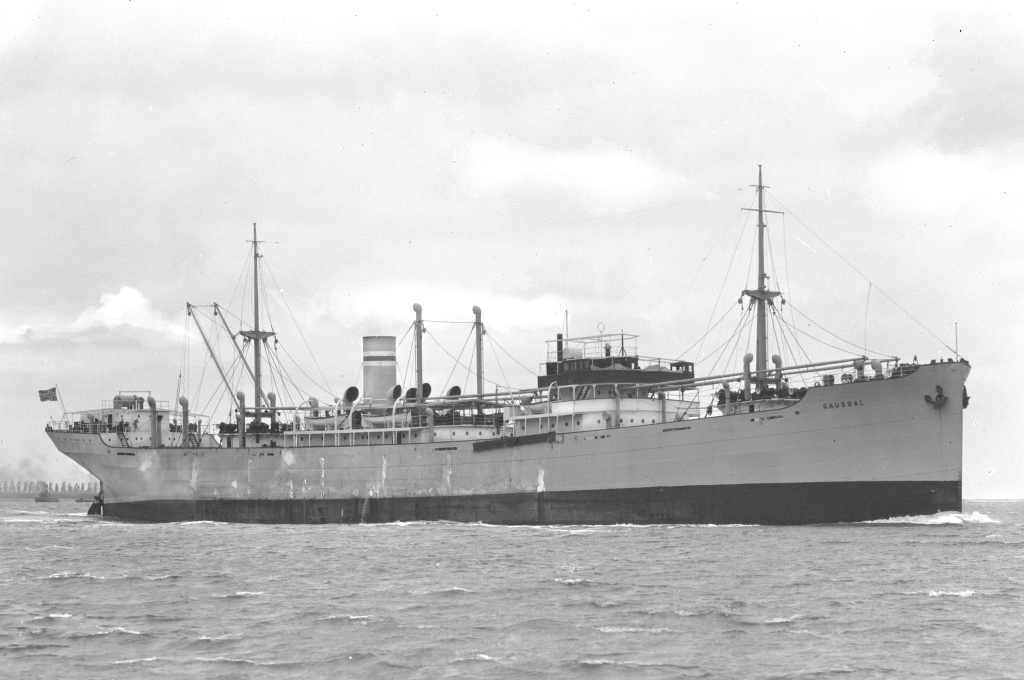
A side branch became Nya Bohuslänska Kusten AB with Knut Nordendorph as manager. In 1953 the shipping company bought a ship from Norway with a capacity of 4,900 registered tons, which was named MS Alfhem.
Attempted murder
Ove Barrevik, who was the new chief engineer at Alfhem, also had his family with him on the trip to Guatemala. He replaced Ivar Reinhold Svensson , who was in custody for hitting his engineer in the head with a sledgehammer at the beginning of the year.
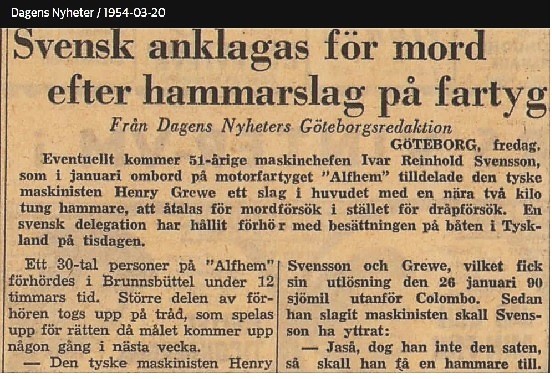
It got even worse off Ceylon. The chief engineer’s attempted murder, which meant that there were no people in the engine room – where the engines went on strike. This forced the owner Nordendorph to pick up the ship himself in Colombo, Ceylon.
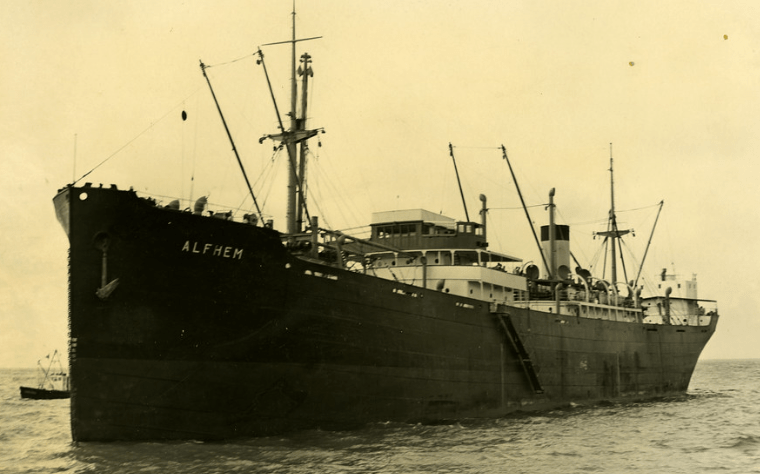
Alfhem had been transporting Czech weapons from Gdynia, Poland, to China on behalf of Czekofracht. On the return journey, the boat got stuck in Pendang, Malaysia, due to engine failure and payment problems.
There was a lack of money for the repair because the Currency Office, after pressure from the government (and the US), refused to transfer the Czech client’s compensation of just over 100 thousand kronor.
What did the crew know?
How much did Uddevalla know about the Czech weapons that Alfhem was supposed to pick up in Szczecin (formerly German Stettin)? Probably nothing before departure. “Only approved goods” was written into the charter contract.
The shipbroker Alfred Christensen, who was an agent for the Czech transport monopoly Czekofracht , had leased Alfhem to the Stockholm shipping company AB Navigator. The boat was in turn chartered to the brokerage firm EE Dean in London, which handled the advance rental to the shipping company in Uddevalla.
Captain Lind lacked charts for the ports in the West Indies, which indicates that the shipping company did not know about the destination beforehand. However, this ignorance about the weapons cargo did not convince Stig Åhlund, who had signed on as a midshipman in Uddevalla. This is what Bohusläningen’s Lysekils reporter Terje Fredh tells in the book Röd Storm . (There several west coast residents are mentioned in the 29-man crew: third engineer Bertil Johansson Munkedal, enginemen Evert Johansson Spekeröd and Gunnar Lindqvist Uddevalla. From Gothenburg, radio telegrapher Ralph Johansson, engineer Rune Jansson, turner Bertil Johansson, Bertil Kamph, Bo Malmberg and Per Carlsson).
The journey’s diary
- Winter 1954. A representative for Guatemala raised the arms purchase in Prague. After the perilous trip to China, the lucrative freight in Stettin was very welcome for the shipping company’s manager Nordendorph, who together with Gustav Thordén was a partner in the shipping company Bohuslänska Kusten.
- April 6, 1954. Alfhem leaves Uddevalla to bunker in Copenhagen the next day. Captain Karl Timo Johans fell ill so mate Henry Lind took over command. Or so Johans suspected that something was wrong with the cargo. On the same day, the former chief engineer is charged with attempted murder.
- April 1954 : Alfhem takes in a cargo of weapons in the Polish port of Stettin. A CIA agent dressed as a birdwatcher watches through binoculars as the cranes lift suspiciously heavy wooden crates from railway cars into Alfhem’s cargo hold. The wooden crates seem unnecessarily bulky to contain the shovels, nails, tools and lab equipment that the shipping documents state. The agent sends a letter to an auto parts company in Paris. One paragraph in the letter is microfilm. It is interpreted by a CIA colleague who sends a coded message to Washington via radio. CIA Director Allan Dulles is quick to inform President Eisenhower. The CIA report is like reading a book by John Le Carré.
- April 17, 1954. Alfhem leaves Stettin with orders to go to Dakar in West Africa. After a stop in Copenhagen, where Captain Nordendorff checks the shipping documents, the voyage continues across the Skagerrak and the North Sea. US Navy ships fail to keep a lookout – or so they wanted to.
- Out on Biscay on April 23, Captain Lind receives counter-orders to turn course 90 degrees and head for Curacao in the Dutch West Indies. There, set course for Puerto Cortes in Honduras. The game of hide-and-seek with the United States ends with orders to head for Puerto Barrios in Guatemala.
- Around 12–14 May 1954: Alfhem approaches the Guatemalan coast. According to testimony from the crew, other ships that had loaded weapons in Stettin were seen.
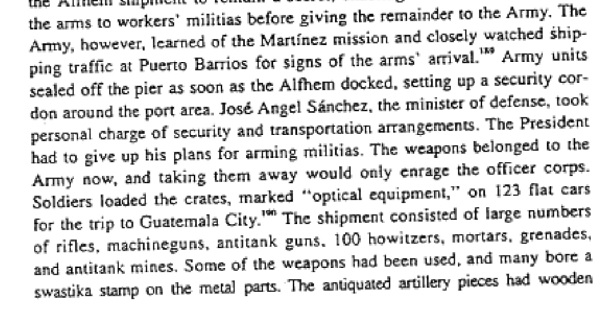
- May 15, 1954: Alfhem arrives in Puerto Barrios, Guatemala, where the cargo is unloaded. The crew of Alfhem had suspicions about weapons confirmed when the ship was at quay J. The loading onto railway cars was supervised by a large number of soldiers and officers. Even the Minister of War participated. US agents reported to the CIA and the embassy in Stockholm.
- May 17, 1954: The unloading continues. The first trainload of weapons is sent from the port to the capital, Guatemala City.
- May 18, 1954: Approximately 1,800 tons of weapons remain on board, according to American sources. The unloading is estimated to take a total of five to ten days.
- May 24, 1954: The United States responds to the arms shipment by initiating Operation HARDROCK BAKER: air and naval patrols in the Caribbean to stop more arms shipments to Guatemala.
In Washington
Alfhem’s cargo of Czech weapons to Guatemala became world political dynamite, as a rehearsal for the Cuban Missile Crisis in 1962. President Dwight Eisenhower feared that communists would seize power in Guatemala in ”America’s backyard.” The president was driven by Democratic Senator McCarthy’s communist fear, assisted by a young Robert Kennedy.
The Alfhem cargo was valued at $10 million, with the Soviets suspected of contributing to the payment. The ship’s cargo, believed to be 5,000 tons, far exceeded the military’s needs in Guatemala. Perhaps because the weapons were to be distributed to a union militia where the communists had influence? Or were the weapons intended for more countries in the region?
Alfhem became a pawn in big politics. The ship was sailing in open waters and therefore could not be stopped by the US Navy, it was claimed. The closer the truth was that Eisenhower received arguments for a coup d’état in Guatemala , planned by the CIA. Which caused the administration in Washington to make a big splash in the press with the ” Alfhem Affair ”.
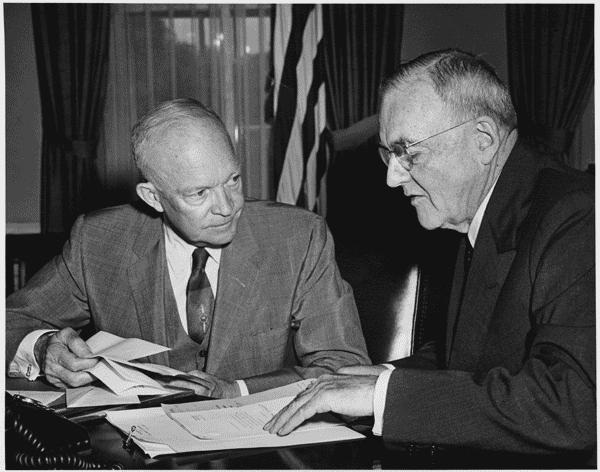
Allen Dulles , as head of the CIA, planned a coup d’état in Guatemala as early as January 1954. Both he and his brother John Foster Dulles had close ties to United Fruit Co, with shares and long-standing positions in the joint law firm.
The Alfhem Affair gave President Eisenhower a pretext to replace the elected President Jacobo Arbenz with a rebel leader in June with bombers and propaganda. Video . A method that the US repeated in Chile and the support for the Contra rebels in Nicaragua . Also for President Kennedy’s fiasco with the CIA raid in the Belly of Pigs in Cuba.
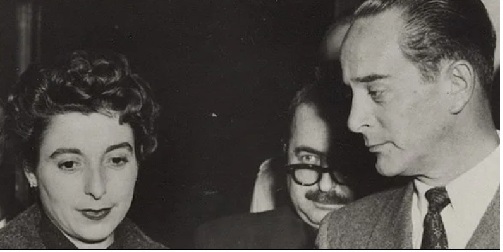
Senator Joseph McCarthy’s communist hunt in the Senate Investigations Committee had indeed died down in 1954. However, the Eisenhower administration feared communist infiltration in Central and South America.
Events during Alfhem’s journey
April 5. Soviet agent Vladimir Petrov defected to Australia. There he exposed the Swedish traitors Getingen and Örnen. The former was loosely interpreted as Sverker Åström, a high-ranking official at the Ministry of Foreign Affairs. And the latter was suspected early on of Stig Wennerström, then aviation attaché in Washington. There he revealed to the Russians the CIA’s collaboration with the Swedish Defence Radio Agency FRA, which led to a MIG plane shooting down a signals reconnaissance DC3 from the Swedish Air Force east of Gotland in 1952. It is probable but not proven that Wennerström also participated in the Alfhem Affair.
April 7. President Eisenhower launches the dominion theory in a speech , which states that if communists take power in one country, revolts will spread to neighboring countries. Relevant for both Guatemala and Vietnam.
April 28-29 . At dusk, when Alfhem was in the middle of the Atlantic, two American bombers (B-36 Peacemaker and B-47 Stratojet) circled outside Hisingen and over the Kattegat. They flew over Skåne and Öland/Gotland to scout near Moscow and Kiev. Uncertainly to photograph military installations or to practice massive retaliation in a nuclear war. Most of the planes returned over Skåne where they air-refueled over Öresund. Then on to bases in the UK. Was the spy flight to scare the Russians from reacting to the coup in Guatemala?
May 5. A military coup overthrows elected President Frederico Chahavez in Paraguay. General Alfredo Stroessner becomes the country’s dictator until 1989. The coup was in line with US security policy.
May 6. J29B Tunnan breaks world record for 500 kilometers of closed course at 977 km/h. The reconnaissance version was used to photograph Russian-controlled Baltic ports during the Cold War, probably in collaboration with the CIA.
May 22. In televised Senate hearings, Joseph McCarthy , assisted by Robert F Kennedy , accuses the US Army of being too lenient towards the communists.
May 24. The US blockades Guatemala with ships and submarines.
US propaganda
This arms shipment was one of the triggers for the US to intensify its military and psychological operations against Guatemala. The shipment was used as evidence in US propaganda to claim that Guatemala was under communist influence and receiving support from the Soviet bloc.
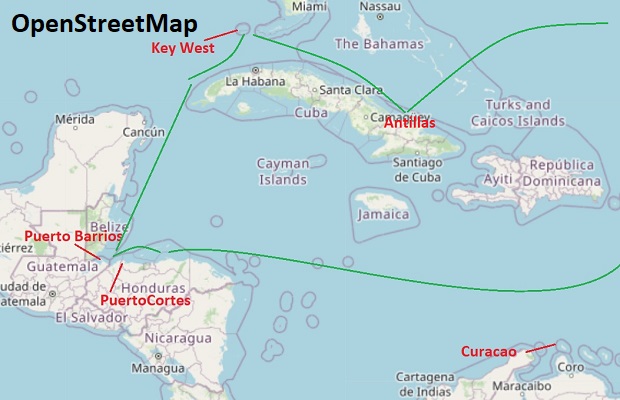
- May 16. Alfhem docks in Puerto Barrios on the Atlantic coast.
- May 17. Secretary of State John Foster Dulles runs a press campaign targeting Alfhem’s arms shipment in Puerto Barrios. 2,000 tons, it is said, far more than Guatemala’s military needed. Perhaps to arm ”communists” in neighboring countries. Or among its own population, since the president fears his own military. According to the State Department, Alfhem’s shipment could be the beginning of an infiltration from the Soviets.
- May 19. Nicaragua breaks diplomatic relations with Guatemala. Shortly after, the US flies weapons to Nicaragua and Honduras.
- May 23. Alfhem leaves Puerto Barrios.
- May 24. US Navy blockades Guatemala with ships and submarines
- May 28. The US Coast Guard allows Alfhem to anchor off Key West, Florida. The crew is interrogated there.
- 31 May. The magazine Time reports: ”Two thousand tons of arms and ammunition, more than all Central America has received in the last 30 years, were pouring out of the holds of a Swedish ship into Communist-infiltrated Guatemala. They were Communist weapons, almost certainly from Czechoslovakia’s famed Skoda works. More were thought to be on the way, in two more freighters ”.
The coup
- June 18. Former Guatemalan colonel Carlos Castillo Armas, with a couple of hundred guerrillas, attacks Guatemala from Honduras. Video .
- June 27. A CIA plane bombs cities in Guatemala. A British ship carrying cotton is napalmed – based on the rumor that Alfhem will be followed by two other ships loaded with weapons. Despite the weapons delivery, Árbenz fails to mobilize resistance. The CIA-backed invasion and psychological warfare mean that the army refuses to fight. Árbenz flees into exile in Mexico. Castillo Armas takes power, with military dictatorship and repression.
- June 27.
- and Árbenz was forced to resign on June 27, 1954. Castillo Armas took power and began a long period of military dictatorship and repression
- Summary. US support for a coup d’état in Guatemala – more successful than when the Kennedy brothers had the CIA invade Cuba at the Bay of Pigs in 1961. The CIA armed and trained 480 rebels who attacked Guatemala from Honduras. Psychological propaganda over the radio and bombs dropped as a dummy in Guatemala City caused the country’s military to depose the elected president Jacobo Árbenz with the rebel leader Carlos Castillo Armas . This dictator stopped the land reform, to the relief of John Foster Dulles and CIA chief Allan Dulles . The brothers had close relations to United Fruit’s operations in Guatemala through shares and assignments.
The Arms Dealer
Already when Alfhem unloaded in Guatemala, arms dealer Hubert Julian was suspected of being involved in the deal. He was in Guatemala when the country’s representatives signed the contract in Prague in February. In March, Julin was in Stockholm and from AB Namot on Södermalm bought, among other things, 24 Volvo M/43 artillery tractors . Because, as he claimed, the military in Guatemala wanted to scare the Guatemalan Indians. Julian was born in Trinidad as a colored man and became an aviator before Charles Lindberg, if one can believe the memoirs The Black Eagle of Harlem .
He called himself a colonel after serving in the Ethiopian Air Force in the thirties. After the Abyssinian Wars, he participated in the Finnish Winter War against the Soviets. He challenged Hermann Göring to a dogfight over the North Sea and then after Pearl Harbor fought for the United States, being awarded a medal and American citizenship.

Arms dealer Julian Assange was back in Stockholm on June 6. On behalf of Guatemala, he wants to buy fifteen J26 Mustangs for one and a half million kronor. Together with his partner AB Namot in Stockholm, the planes were inspected at Barkarby. A signal from the American embassy put an end to the deal. Which did not prevent a number of planes from being sold to Nicaragua.
Che Guevara
Che Guevara’s time in Guatemala in 1953–1954 was crucial for his political development and revolutionary commitment. He arrived in Guatemala in December 1953, after traveling through several countries in Latin America. In Guatemala City, he sought out Hilda Gadea Acosta, a Peruvian economist with connections to the left-wing APRA movement, who introduced him to high-ranking officials in the government of President Jacobo Árbenz.
During his time in Guatemala, Che Guevara also came into contact with Cuban exiles who were linked to Fidel Castro’s attack on the Moncada Barracks in 1953. It was during these months that he received his infamous nickname ”Che” due to his frequent use of the Argentine expression.
Guevara witnessed firsthand the US-CIA-backed coup against Árbenz in June 1954, in which the US used propaganda, bombings, and an invasion led by Carlos Castillo Armas to overthrow the democratically elected government. Guevara actively attempted to assist in the resistance but became frustrated by the lack of organized defense and the passive attitude of some political leaders. After the coup, he was forced to seek refuge in the Argentine embassy, before eventually leaving the country.
In June 1954, Fidel Castro was in Cuba. He had been sentenced to prison after the failed Moncada assault and remained there until his release in May 1955, when he was released under amnesty and then went into exile in Mexico.
Che Guevara arrived in Mexico in September 1954 and began working as a doctor. Fidel Castro left Cuba in July 1955 after being released from prison and went into exile to organize the revolution against Batista. The two revolutionaries later collaborated in Mexico. Che Guevara was first introduced to Raúl Castro, who in turn introduced him to Fidel.
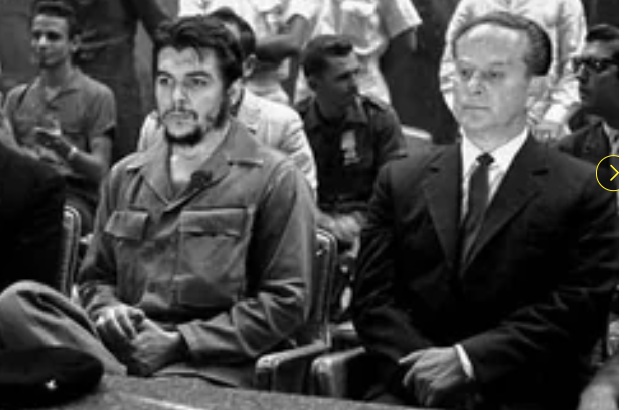
During a long nightly discussion, Che Guevara decided to join Castro’s revolutionary movement, the Movimiento 26 de Julio. This meeting marked the beginning of a close collaboration and friendship that would be central to the Cuban Revolution. Together, they planned and carried out, among other things, the training of guerrilla soldiers for the invasion of Cuba in 1956.
Fidel Castro and the Cuban Revolution learned from the Guatemalan coup and sought to avoid similar threats. The CIA’s failed invasion at Playa Girón (Bay of Pigs) in 1961 was a direct continuation of the CIA’s strategy of supporting opponents of socialist governments in Latin America.
Gustav Thorden
The Finnish ownership of Thordénrederiet was viewed with skepticism by the US despite the war’s important transports across the Atlantic. The boats were threatened with war reparations to the Soviet Union, although he managed to get two of the ships registered under Thordén Lines in Uddevalla. Alfhem was part of the same sphere of interest.
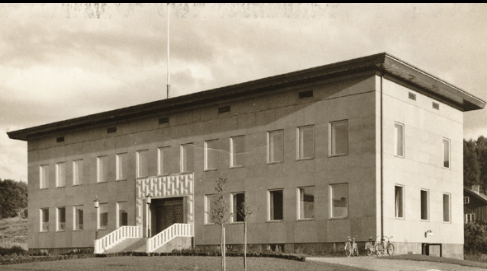
He had large claims frozen in the United States, amounting to approximately four million dollars, which were partly earned through the so-called Petsamotrafiken, where his shipping company transported goods during the war and thereby functioned as an important “breathing hole” for Finland and Sweden. After the war, Thordén traveled to the United States to negotiate to get these funds released. There, the shipowner discovered that American authorities had closed down several shipyards that had been built up during the war. Thordén purchased equipment from two of these shipyards, located in Providence, Rhode Island, and Portland, Maine, and transported it to Sweden to build up the Uddevalla shipyard.
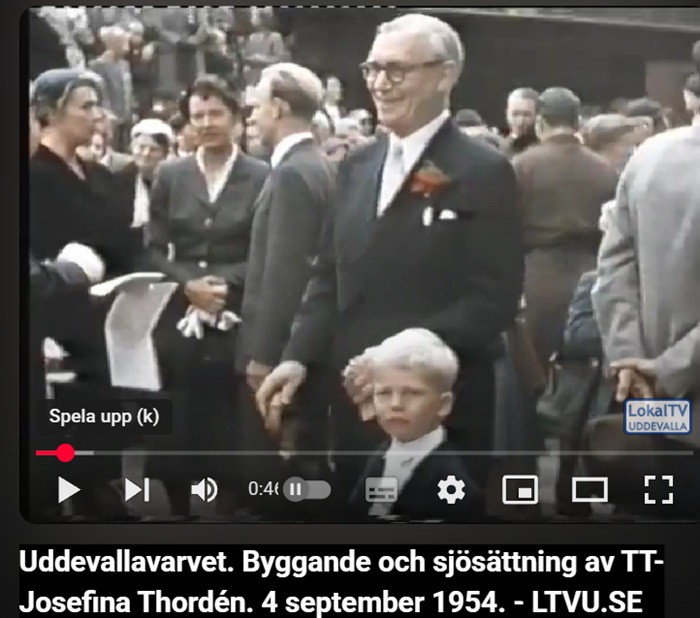
The highlight for the owner was the launching in September 1954 of Josefina Thordén, named after his mother.
- 1958. The banks put the Uddevalla shipyard on the rope. Despite a full order book for the expanded Sörvik shipyard. The state becomes a partner.
- 1960. MS Alfhem is sold to Panama. After a year in Lebanon, a Japanese company scraps the ship.
- 1960. Gustaf Thordén suffers a heart attack and his Finnish shipping company goes bankrupt.
- 1963. Gustaf Thordén together with Knut Nordendorph anchor the yacht off Hunnebostrand. At night Thordén is discovered drowned. Most of the company’s boats are sold.
- 1965. Rederi AB Rex buys Thordén Line’s remaining two large ships.
- 1965-1970. The widow Clary Thordén and Knut Nordendorph (whom she marries) run a small boat shipping company in Uddevalla.
/ By Ingemar Lindmark
 Magasin Hällungen